Before hiring a freelance developer, ask about ownership (who owns the code, domain and accounts), price (fixed or hourly, and what counts as a change), process (how you see progress and how often), quality (speed, security and testing standards) and after launch (handover and support). Good developers answer each question in a sentence or two. Vague answers to these twelve questions are the clearest warning sign you will get.
Use the list for a website, an app or an automation project, and ask every candidate the same questions so you can compare like for like.
Questions about ownership
1. “Who will own the code, the domain, the hosting and the app store accounts?”
Good answer: “You do, from day one. Everything is set up in your name, and I work through access you give me.”
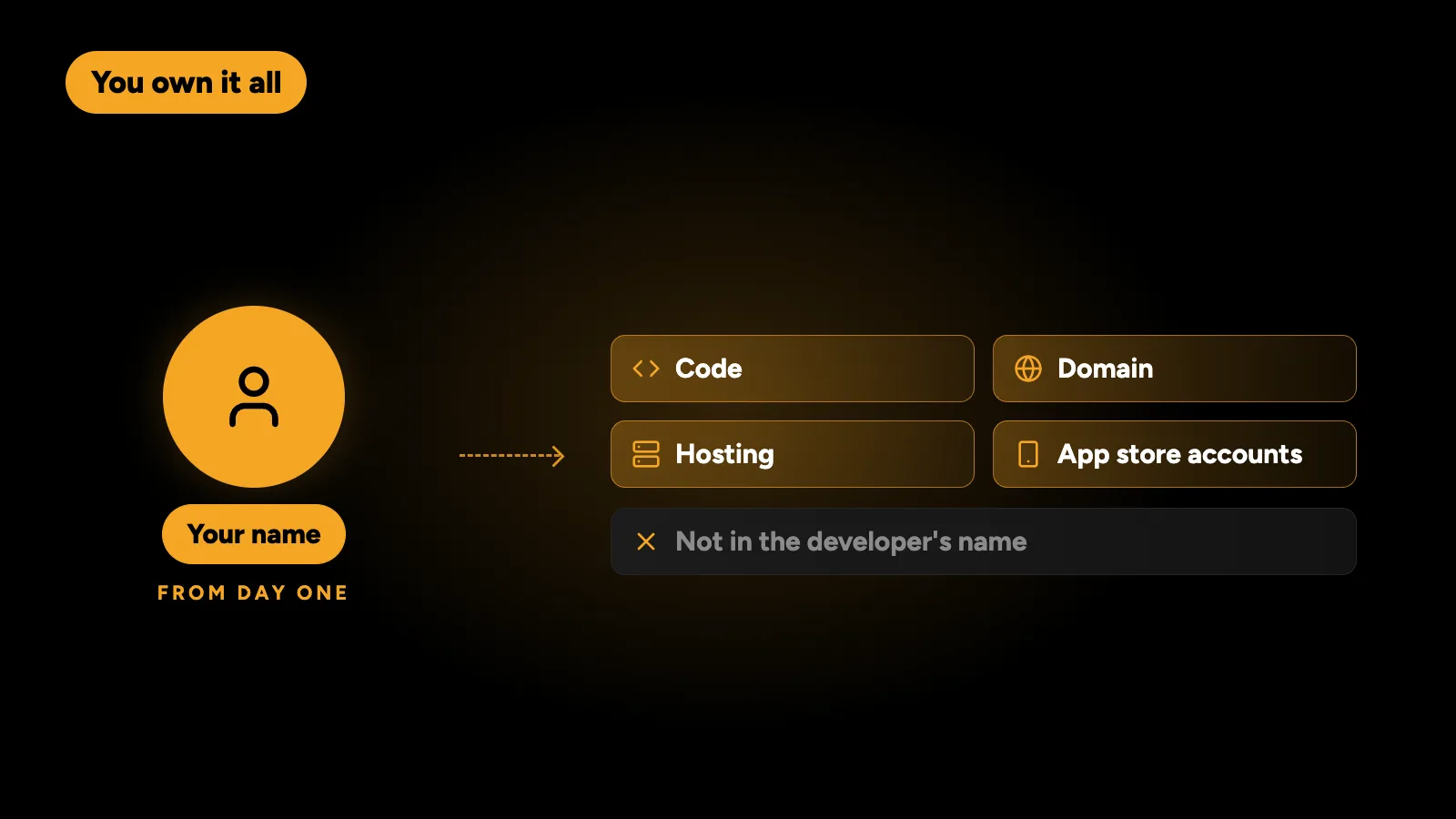
Warning sign: the developer registers the domain, hosting or developer accounts under their own name “to make it easier”. That makes you dependent on them, and recovering accounts later is slow and sometimes impossible.
2. “Will the contract assign the code to my company?”
Good answer: “Yes, once each milestone is paid, the code is yours.” An NDA should be available if you need one.
Questions about price
3. “Is your quote fixed or hourly, and what exactly does it include?”
Good answer: a written list of pages, screens or features, integrations, languages and revisions. For a defined project, a fixed price protects you. Hourly work suits ongoing changes. The trade-offs are covered in WordPress developer rates: hourly vs fixed price.
4. “What counts as a change, and how are changes priced?”
Good answer: “Anything outside the written scope is a change request. I’ll tell you the cost and timeline before doing it.” This prevents arguments later.
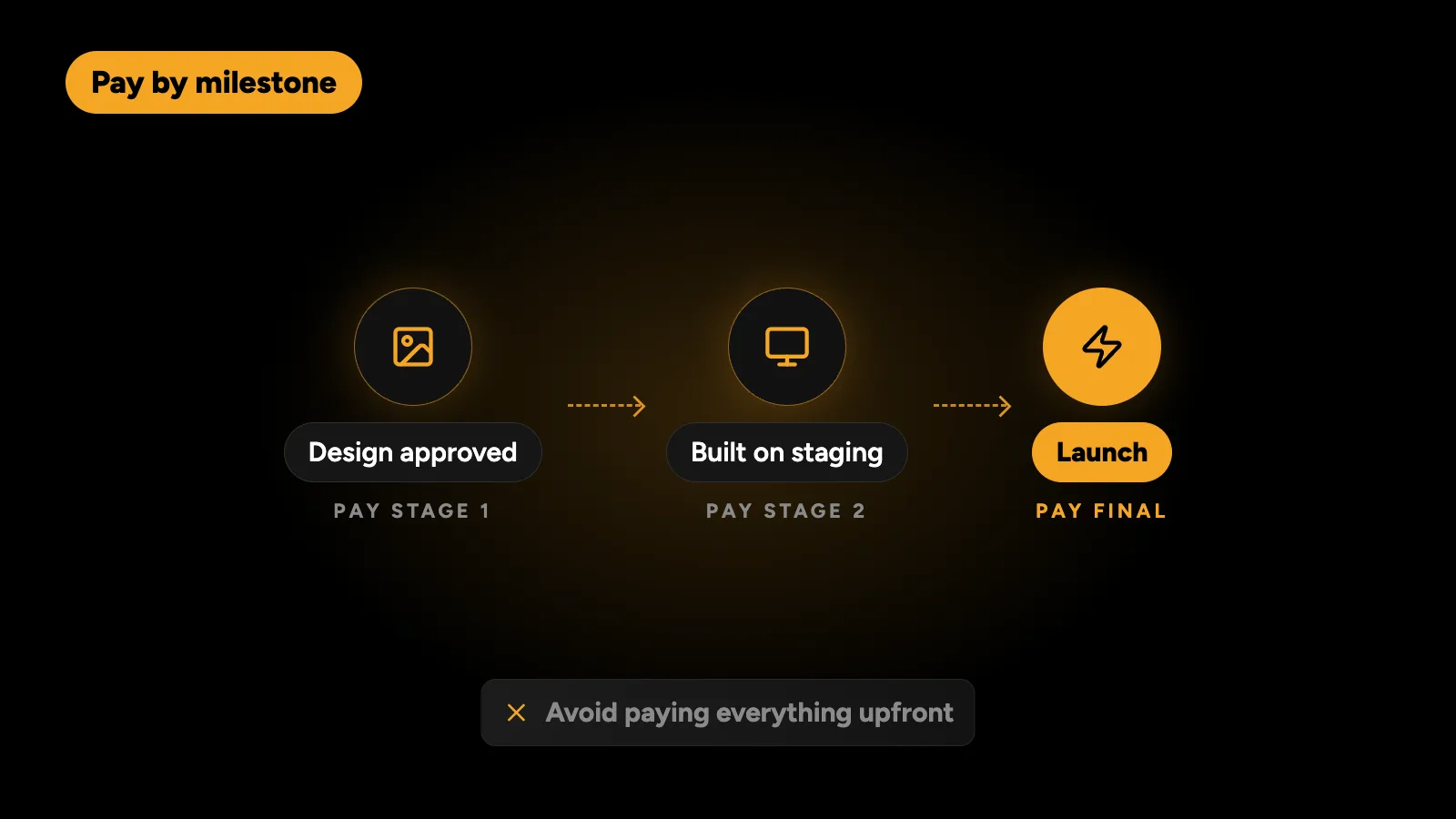
5. “How do payments work?”
Good answer: milestones tied to work you can see, such as design approved, pages built on staging, launch. Avoid paying the full amount upfront for anything larger than a small job.
Questions about process
6. “How will I see progress?”
Good answer: a staging link or test build you can open at any time, plus a regular written update. For apps, test builds on your own phone through TestFlight or Google Play testing.
7. “Who actually does the work?”
Good answer: a clear name. Some freelancers subcontract, and some agencies hand projects to juniors after the sales call. Neither is wrong, but you should know who is writing your code and who you talk to.
8. “What hours can we talk?”
Good answer: a specific overlap with your working day. Time zones matter less than reliability: a developer who replies within your business day and shows progress overnight can be easier to work with than one in your city who goes quiet.
Questions about quality
9. “Can I see work you built, and how was it built?”
Good answer: live sites or apps, case studies and an honest explanation of the stack. For WordPress, check whether a “custom” site is really a bought theme with a page builder. For apps, ask whether they are live in the App Store and Google Play.
10. “How do you handle speed, security and SEO?”
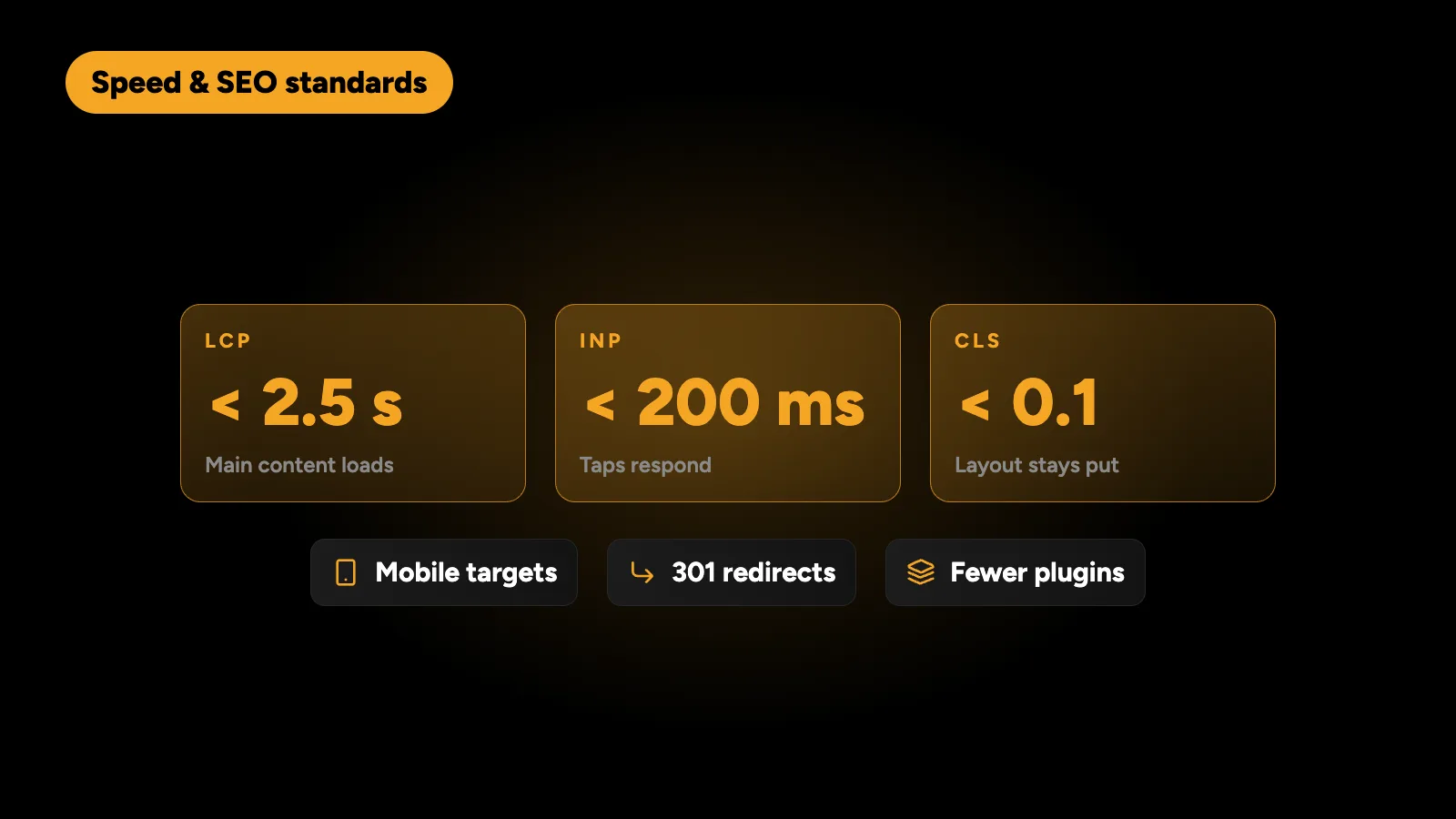
Good answer, for websites: mobile Core Web Vitals targets (LCP under 2.5 s, INP under 200 ms, CLS under 0.1), 301 redirects for every changed URL on a redesign, and fewer plugins rather than more. See how to redesign a WordPress site without losing rankings.
Good answer, for apps: secret keys kept on the server, access rules on the database, payments confirmed by the server and not the browser. If your app was built with AI tools, these are exactly the gaps to check; I list them in is your vibe-coded app safe to launch?.
Questions about after launch
11. “What does the handover include?”
Good answer: every login, a short guide to editing or running the product, the code in a repository you own, and a list of third-party services with their costs.
12. “What happens when something breaks after launch?”
Good answer: a clear support arrangement, such as a fixed period of free fixes, then an agreed rate or monthly plan, with an expected response time.
A quick scorecard
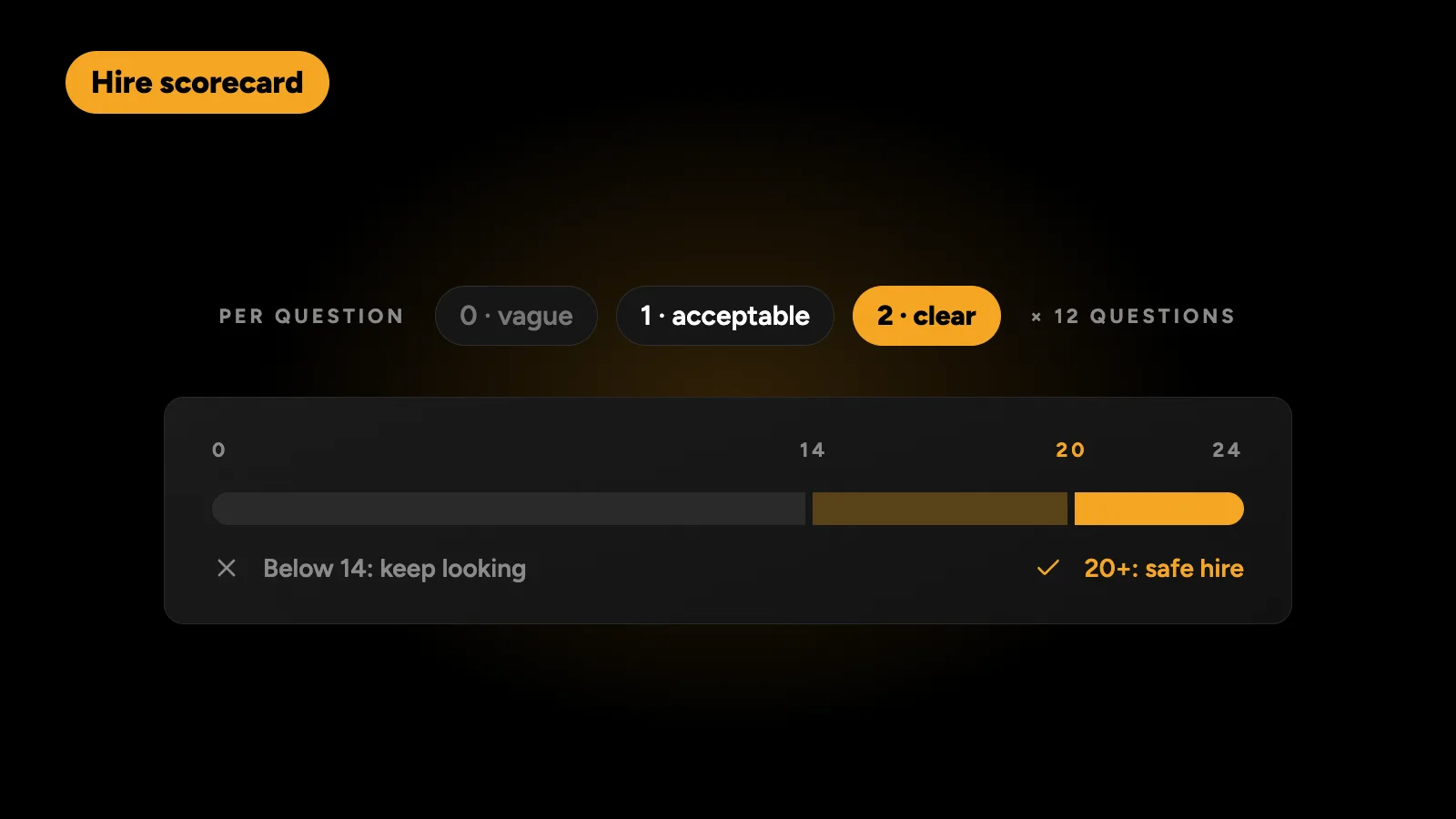
Score each candidate from 0 to 2 on every question: 0 for vague, 1 for acceptable, 2 for clear and specific.
| Area | Questions | What a strong candidate shows |
|---|---|---|
| Ownership | 1–2 | Everything in your name, code assigned in the contract |
| Price | 3–5 | Written scope, clear change process, milestone payments |
| Process | 6–8 | Visible progress, named person, real overlap |
| Quality | 9–10 | Live work, specific standards for speed, security and SEO |
| After launch | 11–12 | Full handover and defined support |
A candidate scoring 20 or more out of 24 is usually a safe hire. Below 14, keep looking, whatever the price.
What should I send a developer to get an accurate quote?
The better your brief, the more accurate and comparable the quotes:
- What you are building, and the problem it solves.
- Pages or screens, and which share a layout.
- Integrations: payments, CRM, booking, email.
- Languages and markets.
- Designs or examples you like.
- Deadline and rough budget.
If you’re unsure what to budget, these guides give realistic ranges: WordPress website costs, MVP costs and Flutter app costs.
How I answer these questions
I’m a freelance full-stack developer in Lucknow, India, building software since 2016. Everything is set up in your name from day one, quotes are fixed and in writing within 24 hours, payments are in US dollars against milestones you approve on staging, and I’m online Monday to Saturday from 10 AM to 11 PM India time. Ask me any of the twelve, and see the services I offer.